A wedding anniversary shadowed by loss
Rute Cardoso’s anniversary post brings Diogo Jota’s wedding speech back into focus. The couple married on June 22, 2025, after more than a decade together, with their three children, friends and family around them. Less than two weeks later, on July 3, Jota and his brother André Silva died in a car crash in Zamora, Spain. The gap between those events is what gives the recording its weight, turning a personal celebration into a document of a future that was still being imagined.
[Read more about Jota’s marriage to his teenage sweetheart](https://www.liverpoolecho.co.uk/sport/football/football-news/diogo-jota-wife-world-cup-34130555) and [his death alongside his brother](https://www.liverpoolecho.co.uk/sport/football/football-news/diogo-jota-dies-liverpool-breaking-31982252).
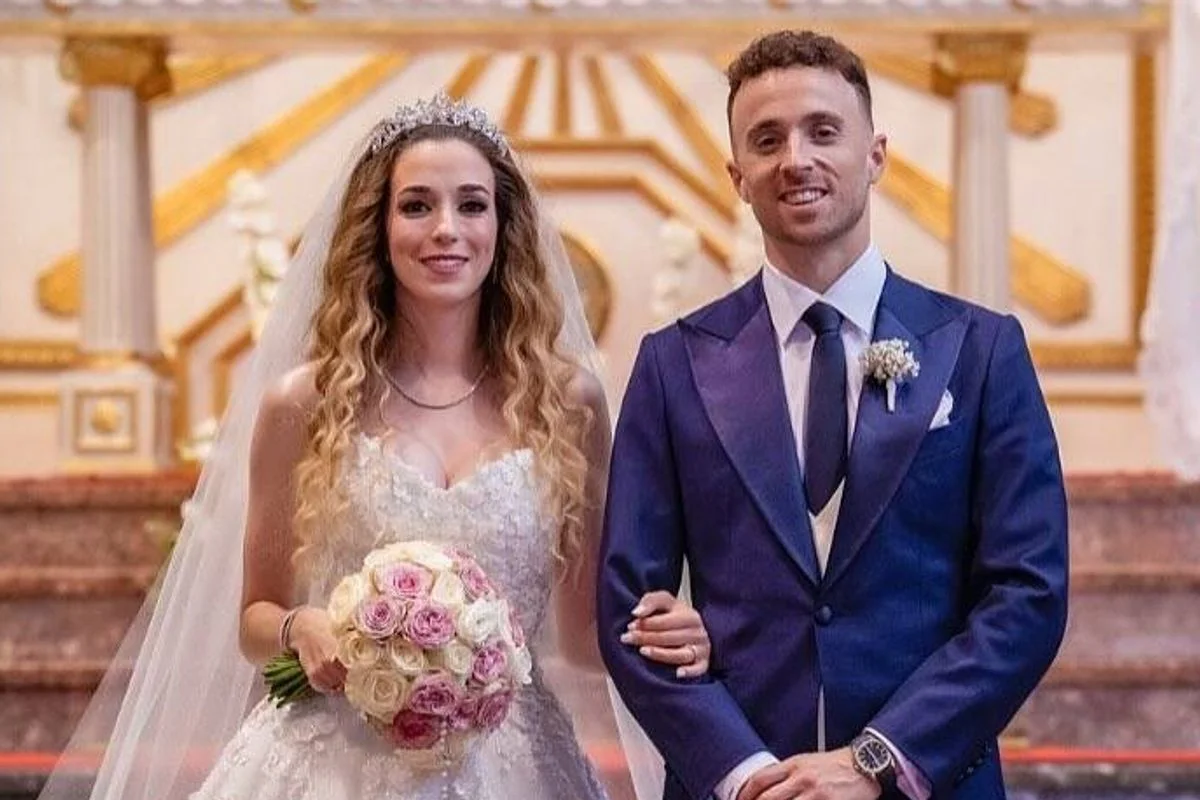
Rute shared video of the speech on Instagram on Monday, marking one year since their wedding. Jota spoke about an uncertain future, then made clear that uncertainty didn’t trouble him: “But the truth is, I don't know and it doesn't really matter to me as long as I'm with you. I love you forever, my ‘Branquinha’.” In a wedding speech, a promise like that belongs to the ordinary language of a couple making plans together; heard after Jota’s death, it carries a meaning neither of them could have intended.
The words are intimate, and the timing makes them especially hard to hear. The clip offers a glimpse of the couple’s life together; it can’t explain the loss that followed. That distinction matters. A short recording can preserve a voice and a moment, but it can’t stand in for the private history behind them, or tell viewers what the family has experienced since.
There’s also a reason such clips travel widely after a public figure dies: they make a large, distant loss feel personal. Here, the recording doesn’t present Jota as a footballer in action or a name in a news report. It presents him speaking to his wife, in the setting of a family occasion, and leaves the viewer with the contrast between the commitment expressed there and the suddenness of what came next. This is more significant than it looks, precisely because the clip makes no attempt to explain or dramatize that contrast.
A private recording in public view
An anniversary post is a personal act, even when it reaches a large audience. Rute’s decision to share the speech gives supporters another way to remember Jota, but the moment still belongs first to her and their family. The clip’s emotional force comes partly from that boundary: people can hear his words, while the deeper meaning of the marriage remains theirs.
Social media often compresses grief into a post that can be watched, shared and revisited. That format can preserve a meaningful detail, but it can also encourage viewers to treat a fragment as if it tells a whole story. It doesn’t. Jota’s words are clear; the experience of those who were present, and of the family he left behind, isn’t something the video can supply.
If you’re watching as a supporter, the most respectful reading may also be the simplest: this was a message of love, shared on an anniversary. There’s no need to turn it into a prediction or to claim that the speech explains what followed. Its power lies in the mismatch between the future Jota spoke about and the life the family was then forced to face. And yet, for those who knew him, the recording may hold more than that public contrast.
Portugal keeps Jota’s name with the squad
Jota’s absence has also been felt around Portugal’s 2026 World Cup campaign. Roberto Martínez’s team are wearing commemorative wristbands bearing the names of all 26 squad members, along with Jota’s. Portugal’s Prime Minister, Luís Montenegro, presented them to the players. Including Jota’s name makes the tribute visible within the group, even though he isn’t there to take part.
[Portugal’s players have also honoured Jota during their World Cup match against DR Congo](https://www.liverpoolecho.co.uk/sport/football/football-news/portugal-world-cup-diogo-jota-34129639). Another [tribute left Jota’s parents visibly emotional](https://www.liverpoolecho.co.uk/sport/football/football-news/world-cup-portugal-diogo-jota-34140220).
Vitinha, the Paris Saint-Germain and Portugal midfielder, described the wristbands before Portugal’s 1-1 opening match against DR Congo. Montenegro had offered them to the squad, he said, and they were designed to be worn on the pitch. Players could decide whether to wear one and when. “We received it with a lot of affection and we chose to use it.” That explanation makes the gesture feel less like a uniform requirement and more like a choice made by the players themselves.
A wristband is a small object, but its placement matters. Jota’s name sits alongside the names of the 26 players representing Portugal, linking memory to the team’s present without suggesting that the loss can be repaired. The gesture also gives players a shared way to acknowledge a teammate and fellow Portuguese figure during a campaign that continues without him. A name on the wrist. A presence in the group’s memory.
The contrast with the anniversary video is striking. One is a private promise between spouses, now heard by a wider public; the other is a collective gesture made by a national team. They serve different purposes, but both keep Jota’s name in view through ordinary actions: sharing a recording, wearing a wristband, choosing to remember.
What the tributes can and can’t do
Public tributes offer a way to mark absence, particularly when the person being remembered was part of a team and a wider community. They can give supporters a point of connection and allow teammates to make their respect visible. They can’t restore the person who’s gone, and they shouldn’t be asked to carry that burden.
That’s the limit of the wristbands and the video, and also their value. Neither offers a complete account of Jota’s life or of the grief surrounding his death. Each preserves a particular detail: his words to Rute, or his name beside Portugal’s squad. For supporters, those details make remembrance concrete without pretending that a symbol can settle the loss.
The anniversary post and the team’s tribute also show how memory moves between private and public life. Rute’s video comes from a family milestone, while the wristbands appear in the shared setting of international football. The settings differ, but the underlying impulse is similar: to keep Jota present in words and gestures as people around him continue with lives and commitments that have changed.
[Follow Liverpool Echo’s dedicated Liverpool FC Facebook page](https://www.facebook.com/LiverpoolEchoLFC) for news and analysis from Anfield.